
Carpenter Ants or Termites? How Portland & Vancouver Homeowners Can Tell What’s Really Damaging Their Home
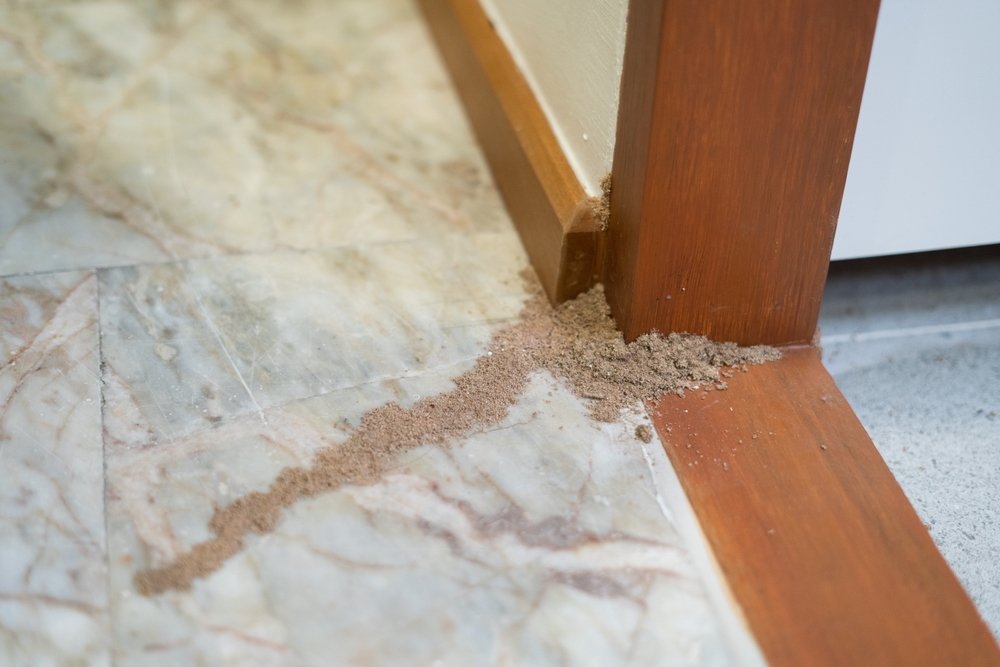
If you’ve spotted sawdust-like debris near a windowsill, heard faint rustling inside a wall, or found a cluster of winged insects on your porch, your first thought was probably: termites. Fair enough — it’s the word most homeowners reach for when wood damage comes up. But here in the Portland and Vancouver area, there’s a good chance the actual culprit is a carpenter ant.
Both pests can compromise the wood in your home. Neither is something you want to ignore. But they behave differently, they damage wood differently, and — most importantly for you — they call for different treatment approaches. Mistaking one for the other can mean paying for the wrong service, or missing an early warning sign until the damage is much more expensive to fix.
Here’s how to tell them apart, and what to do once you know which one you’re dealing with. (If you’re not even sure a pest is the source of what you’re seeing, our guide on how to identify the source of a pest infestation is a good place to start.)
Why This Mix-Up Happens So Often
Carpenter ants and termites share a few things in common that make them easy to confuse:
- Both species produce winged “swarmers” that emerge periodically to start new colonies, often around the same time of year.
- Both can be found in and around structural wood.
- Both leave behind debris that, at a glance, looks like plain sawdust.
Add in the fact that most homeowners have never seen either pest up close, and it’s no surprise the two get lumped together. The good news: once you know what to look for, telling them apart takes about thirty seconds.
1. Look at the Body Shape
This is the fastest way to identify what’s in front of you.
Carpenter ants have the classic ant silhouette — a narrow, distinctly pinched waist between the thorax and abdomen. Their bodies look almost segmented, like three separate beads strung together.
Termites have a broad waist with no pinch at all. Their bodies read as one continuous, thick oval from head to tail, which is why people sometimes describe them as looking “fatter” or more uniform than ants.
2. Check the Antennae
Carpenter ants have elbowed (bent) antennae — they look like they have a joint partway down, similar to a human arm bent at the elbow.
Termites have straight, beaded antennae that look like a small string of tiny balls, with no bend.
3. Compare the Wings (If You’re Looking at Swarmers)
If you’ve found winged insects, this is the clearest tell of all.
Carpenter ant swarmers have two pairs of wings that are noticeably different sizes — a larger front pair and a smaller back pair.
Termite swarmers have two pairs of wings that are the same length and shape, often extending well past the body, giving them a longer, more uniform silhouette in flight.
4. Look at the Color
Carpenter ants are typically black, dark brown, or a deep reddish-black, and often two-toned.
Termites tend to run lighter — pale tan, light brown, or almost translucent-white in the case of the workers, which rarely leave the safety of their tunnels.
5. Read the Damage Itself
This is where the two pests really part ways, and it’s often the detail that matters most for your repair bill.
Carpenter ants don’t eat wood — they excavate it. They chew through wood to create smooth, clean tunnels for nesting, then push the debris out through small openings. That debris (called frass) looks like fine wood shavings, sometimes mixed with bits of dead insects, and it usually piles up beneath the entry point. Run your finger along the inside of a carpenter ant tunnel and it will feel smooth and sanded. (Oregon State University’s Extension Service has a detailed carpenter ant identification guide if you want a closer look at regional species.)
Termites eat wood as a food source, and they work from the inside out, along the grain, which is why termite-damaged wood often sounds hollow when tapped and can show blistering, discoloration, or a slightly crushed look on the surface even when the outside appears intact. Instead of loose frass, termites typically leave small, hard fecal pellets, or — in the case of subterranean termites, the species most common in our region — pencil-thin mud tubes running along foundations, sill plates, or crawl space piers. The EPA’s guide to identifying and controlling termites covers these signs in more depth if you want a second reference.
6. Watch Their Behavior
Carpenter ants forage. You’ll often see them out in the open at night, walking along baseboards, decks, or countertops in search of food — they eat other insects and sugary substances, not the wood itself. Seeing live ants wandering your kitchen at 11 p.m. is a classic carpenter ant sign.
Termites stay hidden. Subterranean termites travel between the soil and your home through those mud tubes and rarely expose themselves to open air, which is part of why termite damage can go unnoticed for so much longer than a carpenter ant problem.
Why Carpenter Ants Are the More Common Culprit Here
Portland and Vancouver’s wet climate, mature tree cover, and older housing stock create ideal conditions for carpenter ants specifically. They’re drawn to wood that’s already damp or slightly softened — around leaking gutters, under-ventilated crawl spaces, or old deck ledger boards — which is why we see them so often paired with the moisture issues covered in Termites, Rodents & Moisture: How Crawl Space Water Starts Bigger Problems. Subterranean termites are present in our region too, but carpenter ant activity is what we’re called out for far more frequently. For more on how a colony gets established in the first place, see our guide to understanding queen carpenter ants.
Are Carpenter Ants Actually Dangerous to My Home?
Yes — just on a different timeline than termites. A termite colony can work continuously and, left alone for years, cause serious structural damage. A carpenter ant colony typically expands more slowly and tends to concentrate around existing moisture or wood-decay problems rather than sound, dry lumber. That’s the upside: carpenter ant damage is often a signal of an underlying moisture issue that’s worth fixing regardless of the ants. The downside: an established, undisturbed colony can still hollow out structural wood over time, and satellite colonies can spread the problem to other parts of the house.
Neither pest is one to wait out.
What to Do If You’re Not Sure
Honestly, even trained eyes sometimes need a closer look — especially with a mixed or early-stage infestation. If you’re seeing any of the signs above, the safest move is a professional inspection rather than a guess. A proper inspection identifies which pest (or pests) you’re dealing with, how far the activity has spread, and whether there’s a moisture problem feeding it.
If you’re in the Portland or Vancouver area and you’ve spotted sawdust-like debris, mud tubes, or swarmers, PestLock offers free inspections to identify exactly what you’re dealing with — and what it’ll take to fix it. Request your free inspection →
We Lock Pests Out
Contact us for a FREE inspection!

We pride ourselves on quick responses and effective solutions for your home or business.

Trust PestLock to provide industry-leading commercial pest control services.

We’ve created this library of insects, rodents, and other pests common in the Pacific Northwest.