
We Followed the Ant Trail: A Velvety Tree Ant Inspection in Maupin, Oregon
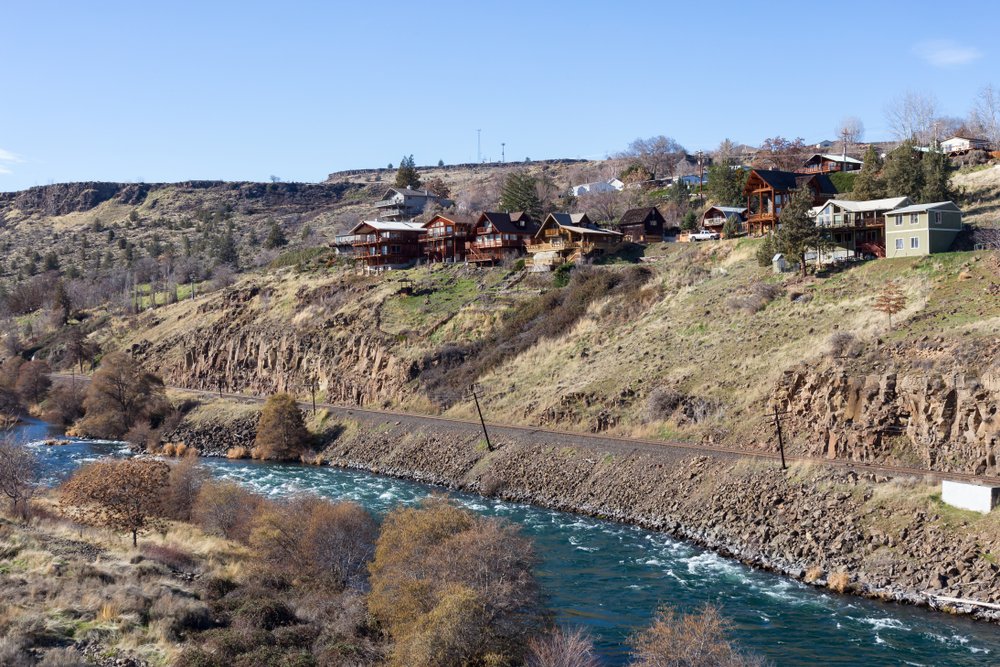
If you live in Maupin, you already know the rhythm of the place — the Deschutes River pulling rafters through town all summer, the high desert heat baking the canyon walls, and the handful of shade trees that every property seems to fight for. That last detail matters more than most homeowners realize, because it’s exactly where velvety tree ants like to set up shop.
Our crew recently inspected a property here after the homeowner noticed a steady line of ants crossing a patio and disappearing into a gap near the foundation. Rather than guess, our technician did what we always do first: followed the trail. (You can watch the actual inspection in our short video on velvety tree ants.)
Why “Just Spray It” Doesn’t Work
It’s tempting to hit visible ants with whatever’s under the sink and call it done. The problem is that spraying the ants you can see does almost nothing to the colony you can’t. Velvety tree ants don’t wander randomly — worker ants lay down a scent trail between the nest and a food or water source, and every ant after that just follows the chemical breadcrumbs. Kill the ants on the trail, and the colony sends more. The trail itself is the clue that actually matters.
That’s why our process starts with tracing the line back to its source, not treating the symptom in the middle.
What the Inspection Found
Walking the trail from the patio, it led across a stretch of gravel, along the base of a concrete retaining wall, and into a narrow gap where the wall met a stack of landscaping timbers near the property line. Velvety tree ants are partial to exactly this kind of setup — dead or decaying wood, loose bark, stacked firewood, even rotting fence posts. In a town like Maupin, where landscaping often blends into high desert scrub and juniper rather than a manicured lawn, there’s no shortage of these hiding spots.
The nest itself was tucked into a void behind the landscaping timbers, with a secondary trail running toward an exterior hose bib — a small but steady moisture source the colony had clearly found useful through the dry months.
Why Maupin Properties Are a Good Fit for This Species
A few things about the area make velvety tree ant activity pretty predictable here:
- Juniper and native shrub landscaping gives colonies plenty of natural wood debris to nest in, often closer to the house than people expect.
- Big seasonal temperature swings push ants toward whatever shade and moisture they can find, which often means right up against a foundation or under a deck.
- River-adjacent properties — including the stretch of homes and lodging near Imperial River Company on the Deschutes — tend to have more humidity pockets near hose bibs, irrigation lines, and shaded crawl spaces — all attractive to a colony looking for water. The same is true further out toward White River Falls State Park, where canyon moisture and dense vegetation create similar conditions.
None of this means an infestation is inevitable. It just means the conditions are common enough that catching a trail early, like this homeowner did, makes treatment a lot more straightforward.
What We Did Next
Once the nest location was confirmed, treatment focused on the colony itself rather than just the visible trail — because eliminating workers without addressing the nest just buys a few days before a new trail forms somewhere else. We also flagged a couple of easy fixes for the homeowner: clearing the loose bark away from the foundation line and fixing a small drip at the hose bib that had been giving the colony a reliable water source.
What Maupin Homeowners Can Watch For
If you’re noticing a similar line of ants on a patio, deck, or foundation wall, a few quick checks can tell you a lot before you ever pick up a can of spray:
- Follow the line, don’t just spray the middle of it. Where does it start and where does it disappear?
- Check for dead or decaying wood nearby — stumps, woodpiles, old fence posts, landscaping timbers.
- Look for moisture sources — hose bibs, AC condensation lines, irrigation leaks.
- Note the time of day. Velvety tree ant activity often picks up during the warmer parts of the day, especially in summer.
If the trail leads somewhere you can’t easily inspect — under a deck, inside a wall void, beneath a foundation — that’s usually the point where it’s worth having someone take a look rather than guessing.
Dealing with ants on your Maupin property? Reach out to PestLock — we’re happy to take a look.
We Lock Pests Out
Contact us for a FREE inspection!

We pride ourselves on quick responses and effective solutions for your home or business.

Trust PestLock to provide industry-leading commercial pest control services.

We’ve created this library of insects, rodents, and other pests common in the Pacific Northwest.